
Insights
November 3, 2026
Building Businesses That Endure — The Chairman's Perspective
Seif El Hakim on what large organisations teach about building businesses, and what ownership teaches that they cannot.
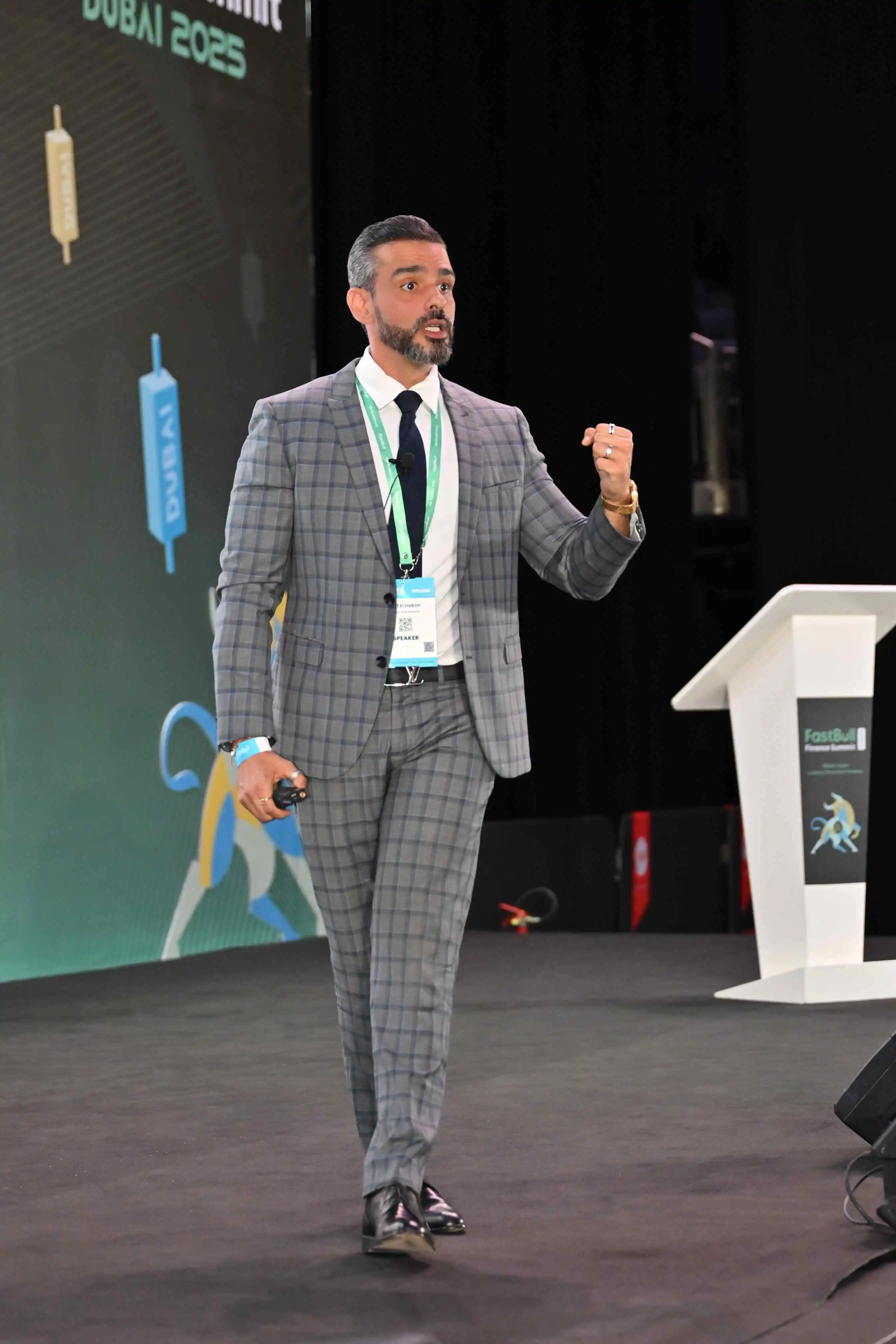
At Samsung Electronics I worked at the company's global headquarters in South Korea, and I served as its Regional Chief Marketing Officer for Russia and the CIS. Few environments teach scale, process and accountability as thoroughly. Building and investing in my own businesses has taught me something different: which corporate lessons travel to ownership, and which have to be set aside.
Managing capital is not the same as owning the risk
Inside a large company, budgets are hard won. They are argued for, defended and measured against a plan, and a manager is rightly held accountable for how they are used. But the capital belongs to the organisation, and the manager's task is to deploy it well. As an owner, every dirham committed is one the business had to generate, or one I chose to put at risk, and the first question is whether to commit it at all. That shift changes behaviour. It makes cash, not activity, the measure of a good month, and it makes the cost of a delayed decision as visible as the cost of a wrong one.
Process protects organisations. Judgement protects owners.
The review layers that surround a corporate decision exist for good reasons: they reduce the risk of any single error. But they also spread responsibility until no one fully owns the outcome. In a business I own, there is no layer to absorb a poor call. I have learned to keep the rigour of corporate analysis while removing the comfort of shared responsibility. The decision, and its consequences, sit with one person.
Fundamentals are not a phase
Many ventures treat profitability as something to address after growth. I take the opposite view. Before we ask how quickly a business can scale, we ask whether a single transaction creates value on its own: the margin, the cost of serving the customer, the time before cash returns. Growth multiplies whatever is already true about a business. If the unit economics are weak, scale only makes the weakness more expensive.
Focus is a decision repeated daily
A diversified group is often mistaken for a group that says yes. In practice, most of my important decisions are refusals: opportunities outside our competence, partners who offer reach without alignment, and investments where we would bring nothing but money. Every business in our portfolio must earn its place by strengthening the others. Diversification without that discipline is simply dispersion.
Capital should be patient, not passive
When we invest, we want to understand a business well enough to contribute to it, through commercial experience, relationships, media reach or operating support. That is why several of our positions are described as strategic investment and advisory rather than simple financial holdings. Patience gives a good business time to compound. Passivity leaves it to chance.
Reputation compounds faster than revenue
Across every market I have worked in, the relationships that endured were built before any contract and kept after it. Products change and terms are renegotiated; a reputation for doing what one says carries across all of it. We try to treat every partner, investor and colleague as someone we expect to work with again.
The real work is execution
The distance between a strong idea and a strong business is covered by execution: the right people, clear priorities, honest measurement and the patience to improve. Large organisations taught me to respect that distance. Ownership taught me that closing it is the leader's work, not a function to delegate.
That is the standard we set at THE ALPHA GROUP: businesses that are commercially sound, capital deployed with care, and relationships that outlast any single transaction. Growth matters to us. Durability matters more.